Better Health Through Better Hearing

Better Health Through Better Hearing

If you have a pain in your body, you know to go to the doctor. A toothache? Schedule a visit with the dentist. Worsening vision? Time to see the eye doctor. But what do you do if you think you’re losing your hearing? Unfortunately, most people who experience hearing loss decide to live with it rather than seek treatment by visiting a hearing care professional and getting hearing aids.

Ignoring hearing loss means more than just missing out on conversations—it could also affect your overall health and wellness. Harvey, Danyell, and Robert are three people who experienced the dangers of hearing loss firsthand. Although all three had hearing loss for decades, they chose to ignore it, until it became too much for them.

Maintaining safety at work

Each year, 22 million American workers are exposed to potentially dangerous noise levelson the job. That risk is highest for those in noisy professions like manufacturing, transportation, armed services, emergency response, and similar fields in which you’re around loud machinery. But hearing loss isn’t the only hearing-related danger at work. For jobs in which hearing is essential, employees with difficulty hearing may put themselves, their colleagues, and the public at risk. Whether misunderstanding work directions or not hearing notifications that something is wrong, poor hearing can lead to unsafe situations.

Noise at work

Harvey Patterson understands this dilemma very well. As a machine tool designer and a NASCAR pit mechanic in his spare time, he has spent much of his life around loud machinery, which took a toll on his hearing and introduced new risks to his job. If a machine isn’t working correctly, the sound it makes is often the first sign that something isn’t right, and Harvey found himself struggling to hear those sound-based clues. After realizing the potential dangers of his untreated hearing loss at work, in addition to struggling to hear conversations with his loved ones, Harvey took action and got hearing aids—and convinced several of his coworkers to do so as well.

When one “good” ear isn’t enough

People with unilateral or single-sided hearing loss might think that because they can still hear out of one ear, they don’t need to address it. But humans are meant to hear binaurally, picking up sound from both ears. Despite hearing out of one “good” ear, such individuals can still experience a diminished sense of balance and reduced spatial awareness. This can lead to an increased risk of dangerous falls and difficulty hearing potential danger like an approaching car when crossing the street.

Additionally, people with a single-sided hearing loss might experience pain and discomfort. Since they need to constantly reposition themselves or turn their head to make sure their good ear faces a speaker, they risk developing chronic neck and back pain or headaches.

Danyell Schendel went most of her life without hearing out of her right ear, and she has described her condition as “having a shadow” on her right side. Recognizing her single-sided hearing loss was no longer something she could shrug off, Danyell got contralateral routing of signals (CROS) hearing aids. This advanced system picks up sounds coming toward her bad ear and transfers them to the hearing device in her good ear. The CROS solution has lifted the shadow she dealt with most of her life and helps protect her from the health and safety risks of untreated single-sided hearing loss.

Mental health

Your ears and hearing play a crucial role in maintaining your mental health. Hearing loss makes keeping up with conversations at restaurants or other social events draining, so you might find it easier to limit socializing or avoid visiting people as a result. Over time, this self-imposed social isolation, as well as the simple fact of not hearing like you used to can lead to depression. Additionally, research shows that, compared to people with normal hearing, individuals with hearing loss show an increased risk of cognitive decline and are more likely to develop Alzheimer’s disease or other forms of dementia.

While Robert Seidler’s passion has long been riding his bike through the backroads of northern Florida, his hearing loss made it difficult to enjoy this hobby. Since he preferred to conduct business meetings and bond with his family and friends while biking, doing so became difficult, and he struggled to hear conversations off the bike as well. Robert’s loved ones noticed that his difficulty hearing led to moments of sadness and depression.

When Robert finally decided to act on his hearing loss and get fitted with hearing aids, his life was transformed. He could once again follow conversations and enjoy all the sounds of nature when riding his bike. He summed up his renewed sense of hearing as “pretty magical.”

Choosing to address hearing loss

The effects of hearing loss extend far beyond missing conversations in background noises and can affect your overall health and mental wellness. But the sooner you seek treatment for your hearing loss, the better your chances of mitigating the associated health risks. Harvey, Danyell, and Robert each recognized how hearing loss diminished their quality of life, and affected their health, then made the decision to address their hearing loss. You too can make the right choice.

The Phonak Lyric Hearing Aid Here is What You Need to Know

A Review of The Phonak Lyric, My Experience Wearing The Truly Invisible Hearing Aid

I have been fascinated with the Phonak Lyric hearing aid for a long time. I mean there is no other hearing aid like it. It lives in your ear for months, you can sleep with it in, hell you can shower with it in. No taking it out, no changing batteries, it is simply placed in your ear and you forget about it until it has to be replaced. I was asked to give it a try, my answer was hell no! But I did it anyway. I am glad I did and here is what I found. 

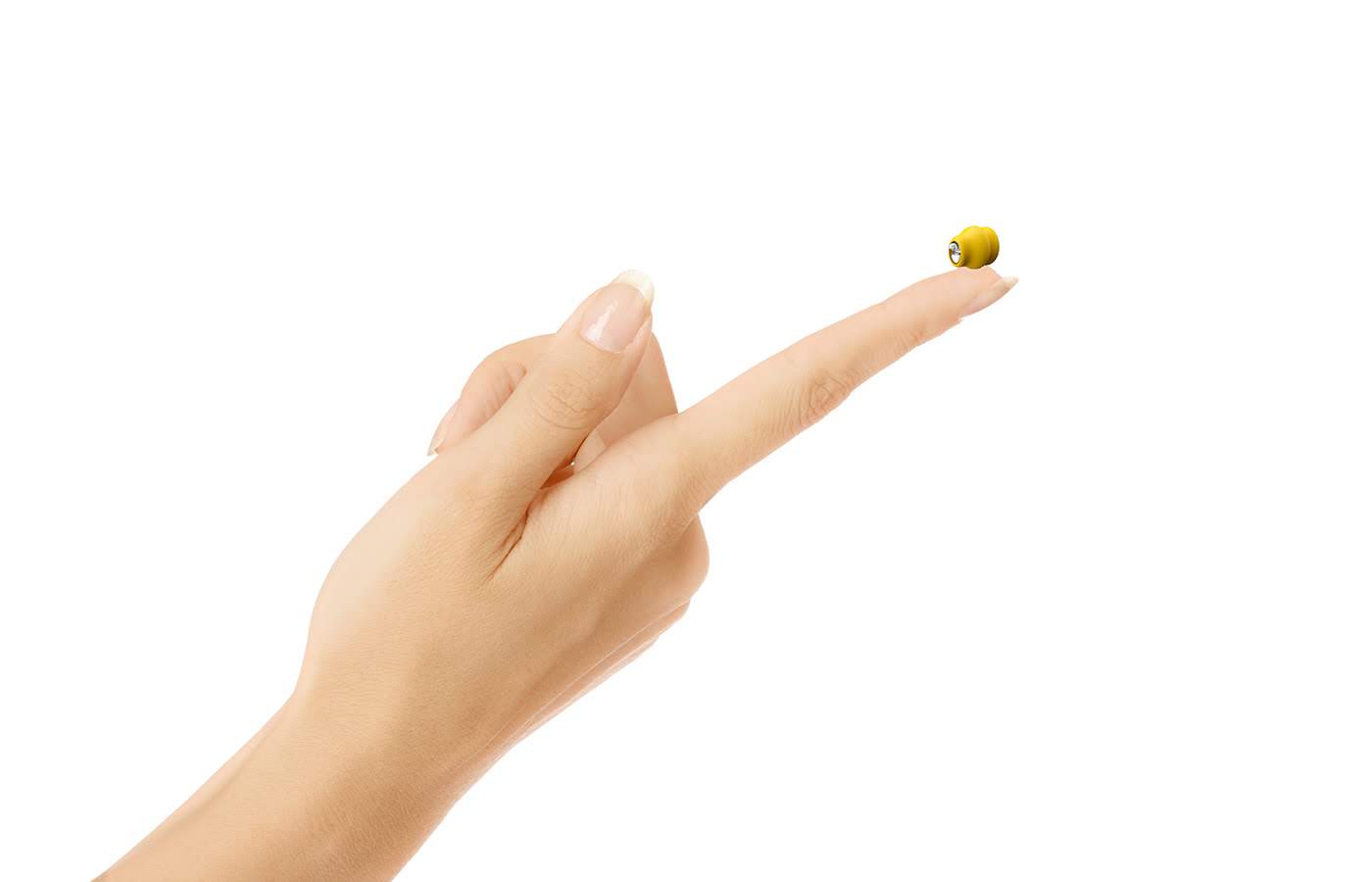
Phonak Lyric on a finger

Mid Ear Pressure Problems

First of, why hell no? I have mentioned it before here, I suffer from mid ear pressure problems because of nasal issues I have had since I was a child. At this time of year, those pressure problems are always at their worst. So the thoughts of having something placed in my ear canals blocking them up were horrifying.

Anyway, I went to speak to the guys at Audi-Lab Hearing Practice in Sutton in Dublin. The first thing they said, was that neither my hearing loss, which is a high-frequency hearing loss, and my mid ear problems made me a candidate for Lyric. In fact, they ensured I was not a candidate for Lyric. Remember that, because it will be important later. Anyway, I am kind of stupid, interested I mean, interested. So I said let’s do it in any way. 

Fitting the Lyric Hearing Aid

The fitting process is different from any other hearing aid. Initially, any ear wax will be removed from your ear canals. Then, your ear canals will be sized and the length measured. Typically, it turns out I have tiny ear canals for a big bloke and one is slightly smaller than the other. Dave programmed the Lyric hearing aids to my hearing loss and then fitted both. The fitting of the Lyric is done with a special forceps and they are placed deep in your ear canals. He then talked me through how they worked and how to use the magic wand that comes with them. 

The magic wand (SoundLync, but magic wand sounds so much better) is a magnet that you use to turn the Lyric devices on and off, turn up the volume and put them in sleep mode. It also has a claw-shaped feature at one end which can be used to take the Lyric out if you need to for any reason. Dave made sure I could easily take out the devices before he would let me head off, just in case I found them massively uncomfortable with mid ear pressure I had reported. 

They Were Amazing

Here is the thing, they weren’t uncomfortable, after some initial discomfort when they were placed in my ear canals, I just got used to them. I mean I knew they were there, but they didn’t cause me any problems or discomfort. Even the feeling of their presence faded after a couple of hours. Like I said earlier, remember I wasn’t a candidate for the Lyric, but I did really well in anyway.

My first impressions of the sound was, damn, these aren’t like anything I have ever worn before. In fact, they aren’t, I have always worn digital hearing aids and the Lyric believe it or not is the last of the analogues. I was astonished to hear Dave sound just like Dave, but clearer, I mean they sounded really natural, almost like my own hearing, except when it was normal. Now that was an interesting experience. 

In the next article, I will cover my daily experience with the Lyric, what it sounded like, how it performed and why I would definitely consider it moving forward. 

Just a Clarification

After I wrote this, I thought to myself that I should clarify why my loss and mid ear pressure would normally ensure that Lyric was not the best choice for me. Firstly, I have good low-frequency hearing, that would normally mean that if you block up my ear canal, I suffer from the curse of occlusion. That basically means that every time I talk or eat, the sounds explode in my own ears, kind of like talking in a barrel. 

On top of that fact, I also have mid ear pressure problems which makes closing up my ear canals even more uncomfortable. The beauty of Lyric is that it sits deep within the ear canal in the bony portion. Theoretically, if we can get a hearing aid that deep, well then occlusion should not be an issue. Dave got it that deep, and occlusion was not much of an issue thankfully. It just goes to show that giving it a try can often be worth it.  

Looking for hearing aids in Phoenix, Arizona? Well you need to see this guy

We are very happy to welcome Dr Cliff Olson and Applied Hearing Solutions to the Hearing Aid Know Network. Dr Olson’s name has become synonymous with clear and honest hearing aid and hearing care advice on his Youtube channel. His outlook and ethos chimes with ours and we are happy to have him on the network. Truly, if you are looking for hearing aids in Phoenix, Arizona.well then this is the place to start.

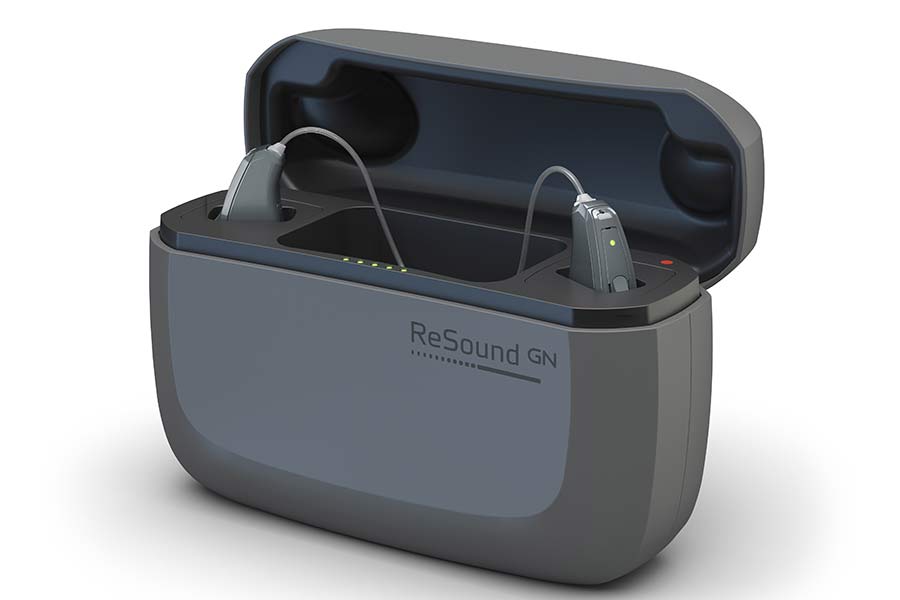
Linx Resound Quattro rechargeable hearing aids

Dr Olson was a Marine Corp Scout Sniper Team Leader up until 2006. After he left the service he discovered that he had a hearing loss. That prompted him to study Audiology and gain his Doctorate. He moved to Arizona in 2015 and opened his business soon after.

The Best Advice

Dr Olson is committed to offering the best advice and his intimate understanding of hearing loss and its effects have moved him to offer informational videos informational videos for his Youtube channel Doctor Cliff, AuD, to help consumers around the world, better understand hearing loss and their treatment options. That is in fact what we like so much about Cliff Olson, like us, he is dedicated to providing good solid advice to people he may never meet.

Best Practice Hearing Care

Dr Olson is committed to delivering the very best hearing aids with gold standard best practice hearing care. He is a strong advocate for in-depth testing and fitting of hearing devices. That means that when you go to see him, you can be assured that you will receive a gold standard service. 

Ecstatic Patients

When you look through Dr Olson’s testimonials you get a clear idea of who he is and the level of service he offers. Testimonials like the one below are typical of the praise he receives.

“I drive from East Mesa to see Dr. Olson. It’s worth the drive because Dr. Olson truly works to get you not a good fit but a great fit. Watch his YouTube videos and you see that he does his homework. He’s a one-man shop but that’s a benefit in getting personalized care. I’ve been to three audiologists this year and wasn’t happy until I found Dr. O.”
G Hancock

Phonak Introduce Remote Support With The New Marvel Hearing Aid Range

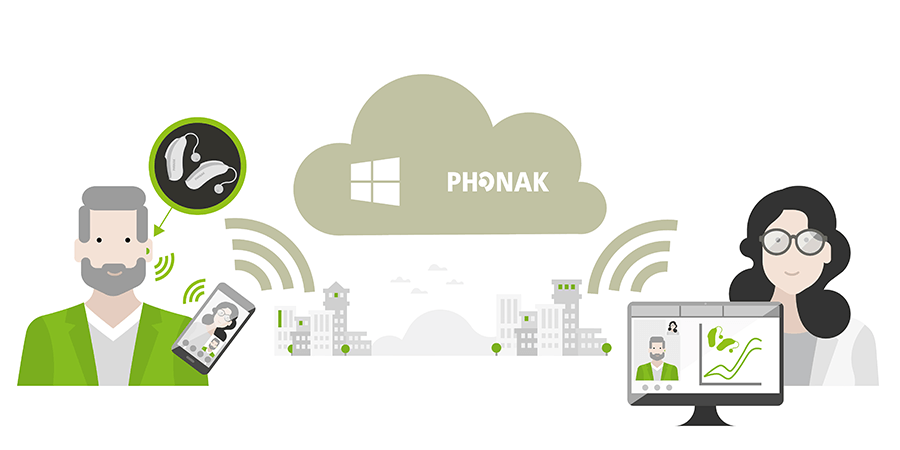
Phonak are the latest hearing aid brand to introduce a remote fine-tuning feature to their hearing aids. Phonak have partnered with Microsoft to bring this new service to fruition. Phonak’s new Remote Support Service enables the remote fine-tuning of its Audéo Marvel Bluetooth hearing aids from virtually anywhere in the world. The feature which is available through the new Phonak app allows hearing aid wearers to communicate with hearing care professionals by smartphone audio and video. It also will enable professionals to adjust their hearing aids in real time anywhere (except maybe the toilet, some things need to be sacred).

Phonak remote support feature

The new myPhonak smartphone app is used to enable the system. It utilizes Microsoft’s Azure cloud-based technology platform to manage audio, video and digital communications. The Azure platform is pretty robust and it offers the stability needed for the numerous data exchanges going on. 

The system is pretty cool, it offers video calling which enables the user and their hearing care professional to see and hear each other while the hearing care professional makes simultaneous real-time updates to the hearing aid programs.

It opens up a lot of opportunities for change and benefit to hearing aid users and professionals alike. It means that you could potentially have your hearing aids adjusted while sitting in a restaurant, or cafe, or just on the couch at home. The system offers:

  • Full fine-tuning capabilities. The audiologist can make nearly all the same changes remotely as in the clinic.
  • Real-time adjustments. The audiologist makes the tweak and the patient instantly hears the difference—enabling efficient fine-tuning in a variety of listening settings.
  • Video chat. Face-to-face interaction between professional and patient results in much better communication. At the same time, the audiologist controls the hearing aid adjustments from the desktop computer.

Phonak have been trialling this type of system with the VA (the U.S. Veteran’s Administration) which is one of the world’s largest providers of hearing aids. Now they have introduced the system to their private hearing aids offering.

Remote Care Revolution

We are in the middle of a remote care revolution right now with all of the major hearing aid brands moving toward offering the system. Signia was the first and they were quickly followed by Resound, we believe that the rest will follow. 

What Will it Mean For Users

That is a good question, just because these systems are in place doesn’t mean every professional will provide the service. I think it will be a personal decision for providers on how and if, they provide remote care. There also may be financial concerns to be considered. Remote care is very new and there doesn’t seem to be any general consensus within the profession about whether it should be included as standard or whether it should be charged for as an extra. 

Users Will Demand

As with many things, I think the shape of remote care in the future will be based on your demands. Market demands will shape how remote care is offered and whether it is an industry-wide phenomenon. The hearing aid brands are certainly betting on it being the future and my own expectations are that it will become commonplace. 

The Systems Right Now

The Signia system is a lot like Phonak’s Remote Support Service but has less real-time adjustment capability. Resound’s system is a different type of system with no real-time communication or fine-tuning. With the Resound system, the professional makes the changes and then pushes out those changes to you. They appear in your app and you apply them. 

Phonak Remote Support will be available with the rollout of Audéo Marvel hearing aids at the end of November 2018 in Australia, Canada, France, Germany, Switzerland, United Kingdom and the USA.

Excited About Hearing Aids? Maybe You Should Be.

As I said, do you remember that time you thought to yourself I just can’t wait to wear hearing aids! Yes, I didn’t think so, usually, the thought of wearing hearing devices is met with dread and some trite tosh about getting old. But I think that will change; in fact, I think before long people with normal hearing may well be looking forward to hearing devices, let me explain. 

Linx Resound Quattro rechargeable hearing aids

Getting Excited About Hearing Aids

In the last couple of years hearing aids have begun to change, the R&D behind them has expanded in concept. While the main thrust of the R&D efforts is still towards providing the best hearing experience. A lot of thought is going into a deeper integration of hearing aids into the life of people who wear them. The direction that the hearing aid brands are taking is damned exciting.

Integrated For Life

I spoke about Kaizn by Oticon in the last article, and I said that I loved the concept but I wanted more. The thing is that it is obvious that the brands are thinking about delivering more. With the advent of onboard sensors to hearing aids and the introduction of widespread and deepening connection between hearing aids and Smartphones, the ground is being laid for impressive things moving forward.

Each brand has begun to up its game when it comes to accompanying apps for hearing aids. The functionality and power provided by apps from Resound, Widex, Phonak, Signia, Unitron and Starkey are outstanding. While the Oticon Opn app was nothing special, they too have begun to take strides forward. I think every hearing aid manufacturer is considering how they will make their hearing aids indispensable to you. I think every brand is considering how they will make their hearing aids more integrated into your life. 

Health Tracking

What is more important then your health? Well for me it would be strong cider and bacon. Often together! That’s why I am not going to make it to sixty. Anyway, health and maintaining it has become exceptionally important for many people across the world. Tracking of vitals and exercise taken is a key part of understanding the general health of someone. 

As I have said before, the ear is the ideal place to get the data that you need to track health. We have already seen sensors in hearing aids. I think we can expect to see more. I think that all of the hearing aid brands are considering how to provide the features and new use cases for the data that it will provide. That type of functionality means that our hearing aids may well become our personal health assistant in the near future. 

The Personal Assistant

I have said it many times, I want my hearing aids to be my personal assistant. I want them to help me keep track of my health, of my day and my schedule. More than that, I want them to keep me informed and even educate me. If I stand outside a cafe or restaurant, I want them to tell me about it. If I stand to look at a landmark or a tourist attraction I want them to give me a run down on it. In essence, I want my hearing aids to make my life simple yet enrich it. 

I don’t think this is too much and while right now it sounds a bit science-fictiony, I think we will see early versions of this concept within the next twelve to twenty-four months. In fact, I think many of the brands are working towards this, I would be surprised if they weren’t. 

The Next Frontier

I think the next frontier for hearing aids is deep personalisation. I think it is deep integration into your life. When that happens, when hearing aids help you hear better, make your life simple make you healthier (in my case berate me for lack of exercise) and enrich it on a daily basis, well then I think a lot more people will be excited about wearing hearing aids, or whatever we are calling them then. 

BIHIMA Conference 2018, Talking About The Future of Hearing Aids

I am attending the BIHIMA Conference in the UK today and tomorrow and will be reporting as we go. The conference is an exploration of the possible futures within hearing aids. First up is Futurologist, Dr James Bellini.

In essence, disruption and computing power is going to exponentially change during this generation.Many of the innovative technologies we see today will have an effect on healthcare delivery. More and more consumer patients will choose virtual consultations, they will look for connected health, they will concentrate on well being and preventative healthcare as opposed to reactive healthcare.

Big Innovations in Hearing Care

Big data will drive innovation in hearing care. Big data analytics will give evidence and insights which will lead to predictive anaalytics that will change treatment strategies and prevention strategies. Telecare will be a large part of all future healthcare. The future for hearing aids is sensor rich, multi-purpose hearable devices.

Beyond that, stem cell innovation may lead to a future with devices, a future where hearing loss is treated with targeted genetic treatment. 

EuroTrak 2018

Next up will be an introduction to EuroTrak 2018. EuroTrak is a European survey for people with hearing loss. The data generated is used to understand the changing needs of users and how we can meet their requirements.Hearing loss appears to be static, no major increases or decreases. Adoption rates of hearing devices is 48% in the UK, with only Denmark having a higher adoption rate.

Hearing aid adoption has increased within the mild and moderate hearing loss in the UK, with 30% of people with mild loss using hearing aids and 50% in the moderate. First time users say that their hearing aids work as expected or better. Overall satisfaction with hearing aids is 74% in the UK, but satisfaction rate correalates with wear time, the longer they wear them, the happier they are. 


Breaking into workshops

Over the two days there will be workshops from all of the hearing aid brands involved in the conference, the first one I attended was with Oliver Townend from Widex on machine learning and the basis of their strategy in the new Evoke. It really does look like an interesting development and we will cover it later on these pages

Onto the Eurotrak workshops which will discuss the findings in a little more detail and consider what they mean for actual professional practice. Some interesting insights here and again, I plan to dig deeper into the EuroTrak data at a later stage and write about the findings.

Now onto the Bridget Shields Report 2018: The consequences and costs of untreated hearing loss. In essence, hearing loss is increasing in prevalence across Europe and the hidden costs of hearing loss are thought to top 500 Billion Euro. It is also cleaar that hearing loss affects many aspects of life, including

  • Mental and physical health
  • Quality of life
  • Employment and lifetime earnings

In particular the concern about hearing loss in middle age as a clear risk factor for dementia has risen.

Curtis Alcock is on now with a presentation called: Will hearing technology ever remove the need for the hearing care professional.

If you like what you see, share it so others can benefit

Oticon Release More Opn Custom Hearing Aids Information to Consumers

Facebook Campaign Gets Consumers Ready For Opn Customs

I noticed today that Oticon had pushed out a new Facebook marketing campaign speaking about the new Oticon Opn custom hearing aids. The landing page of the campaign gives some pretty good details about exactly what custom hearing aids will be, and their Made For iPhone abilities. Without any further blah, let’s take a look. 

The Famous Oticon Open Sound

Oticon Open Sound

The Opn from Oticon has become famous for its very different sound quality in noisy situations. This is because Oticon is using a very unique way to use directional microphones to process speech sounds. The first question I would have about the customs would be are they capable of the same type of processing? The answer is not yet clear on that point, but, I would guess that any Opn custom with twin microphones should be capable of the now famous Opn sound. We will clarify that point when we get the full technical details at launch.

Five Opn Custom Hearing Aid Types

The new Opn customs will be available in five different In The Ear models at every technology level. That’s an IIC. a CIC, an ITC, a Half Shell ITE and a Full Shell ITE. The last three in that list will be Made For iPhone hearing aids which will make many people happy. It makes Oticon only the second hearing aid brand to offer Made For iPhone custom hearing aids. Let’s take a look at the devices.

Invisible In Canal

Opn IIC hearing aid

They say “These ‘invisible’ hearing aids sit far enough in the ear canal that people won’t be able to see them. A thin plastic pin remains accessible, which you use to pull the hearing aids out again. Like all Oticon Opn hearing aids, the Invisible-In-the-Canal (IIC) style automatically adjusts to different sound environments – which means you don’t have to touch them or change their settings during the day.” The IIC will definitely not be Made For iPhone and in fact may not be wireless at all. Oticon have made some strides in the design of the device and they say it will be the smallest IIC ever. They reckon that it should physically fit 8 out of every 10 people. The devices appear to be powered with a size 10 battery.

Completely In Canal

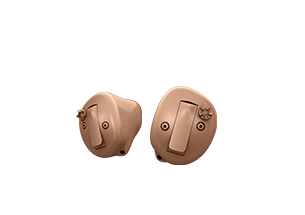
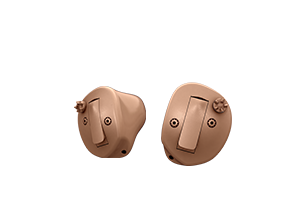
Oticon Opn CIC hearing aids

They say “These very discreet hearing aids sit completely inside the ear canal and are hard to see – though not entirely hidden. They have an optional control button.” Again, the CIC devices will not be MFI enabled, however, I would expect them to be wireless enabled. That should mean that they will be compatible with Oticon’s own wireless hearing aid accessories. The addition of an optional control button also gives CIC users the ability to manually control the aids, which is never a bad thing. The devices appear to be powered with a size 10 battery. Looking at the faceplate of the CICs, they could be a twin mic hearing aid, if so, they may well deliver the Open Sound. 

In The Canal

Oticon Opn ITC hearing aid

They say ” In-the-Canal (ITC) hearing aids can accommodate larger batteries and more advanced technologies such as Bluetooth® low energy technology. This is because they are larger and more visible than the two smaller types shown here: Invisible-in-the-Canal (IIC) or Completely-In-the-Canal (CIC) hearing aids. With Bluetooth, ITC hearing aids can connect to other devices including smartphones, TVs, computers, music players and remote microphone accessories. You can make hands-free calls using your hearing aids, and listen to stereo audio and music wirelessly. The larger faceplate allows you to control them via the programme button or a volume wheel, and makes them easier to handle.” This is an excellent hearing aid, it will be Made For iPhone and have access to their Connect Clip, while being pretty discreet. 

In The Ear Half Shell

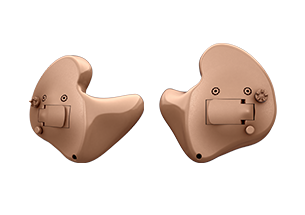
Oticon Opn half shell in the ear hearing aid

They say “These in-the-ear hearing instruments fill up more of the visible part of the ear. They are easy to use, fully featured, and offer wireless connectivity.” The half-shell offers the best of both worlds, a slightly easier to handle device that offers manual controls that still offers discretion. The half-shell device will be MFI enabled and have access to the Connect Clip, it should also offer the Open Sound. There is no word so far on whether they will be able to fit a telecoil in it though. While some aren’t that interested in Loop systems, many love the telecoil once they have tried it out in a theatre or public place. 

In The Ear Full Shell

Oticon Opn full shell custom hearing aids

They say “For people who prioritise an instrument that is extra easy to handle, control, and adjust. These in-the-ear hearing aids are fully featured and offer wireless connectivity.” The full shell should offer a size 13 battery and I have little doubt that it has a telecoil on board as well as access to Oticon’s own wireless accessories and a direct connection to iPhones. Again, with the twin-mics onboard the device should offer the Open Sound. 

While Oticon has not given an official release date, (word is, end of October 2018), you have to believe it will be sooner rather than later. With the Facebook campaign stoking interest in Consumers, they will need to strike while the iron is hot. As the devices are released and we get the full technical details, we will add them to our Oticon Hearing Aids Brand Page. So keep checking back for more. 

Hearing Aids & Machine Learning, What Will it Mean to Users?

Making hearing aids continuously improve

With the recent launch of the Widex Evoke, we have moved into new territory for hearing aids. In the article hearing aid innovations that change everything, I detailed machine learning as one of the features that will change everything for hearing aids as we move forward. But why do I think so you may ask and what difference can it make? I don’t think I am too unrealistic in saying that it could change not just your experience with hearing aids, but also your experience with hearing professionals dramatically and forever. Let’s take a look at why.  

Widex Evoke Hearing Aids

The Age Old Fine Tuning Problem

Its the age old fine-tuning problem, you go and see your hearing professional and try to explain the issues that you had in a particular sound environment. They then make changes to the programming of your hearing aids. Unfortunately, those changes are made in quiet rooms in clinics and you don’t know what the effect will be until you are back in the situation. So starts a back and forth system until one of two things happen, the hearing professional gets it right, or you give up. 

We have been aware of this problem for many years and in recent times some of the hearing aid brands have introduced telehealth features to begin to tackle the issue. But what if you made your own changes in real time? What if those changes were then used as the basis of better programming for not just your hearing aids, but everyones? Meet machine learning. 

Using Massive Computer Power To Crunch Numbers

In essence, machine learning is a part of the greater artificial intelligence movement in computers. Large amounts of data are processed to in order that a management system can learn from the data. Machine learning and other artificial intelligence strategies have been used in healthcare for several years, but never before in hearing aids. The direct connection of hearing aids to a Smartphone (which we can thank GN Resound for) is what has made it possible. 

In the case of the Widex Evoke, the machine will be learning the preferences of hearing aid users in different sound situations. This will allow the machine to make better judgements on what hearing aids should do in complex sound situations. Hopefully, it will be learning the preferences of thousands of hearing aid users, with luck in the future, it will be hundreds of thousands. 

The issue with machine learning is that in order for it to be successful, it needs large volumes of data points to crunch through. Without that data, both its learnings and effects are limited at best. If Widex can convince users to become involved with the machine learning feature, those users will be rewarded with hearing aids that continuously evolve to be better at what they do. In other words, their hearing aids will continuously be upgraded to be better at what they do based on real-world data. 

Designing Simple

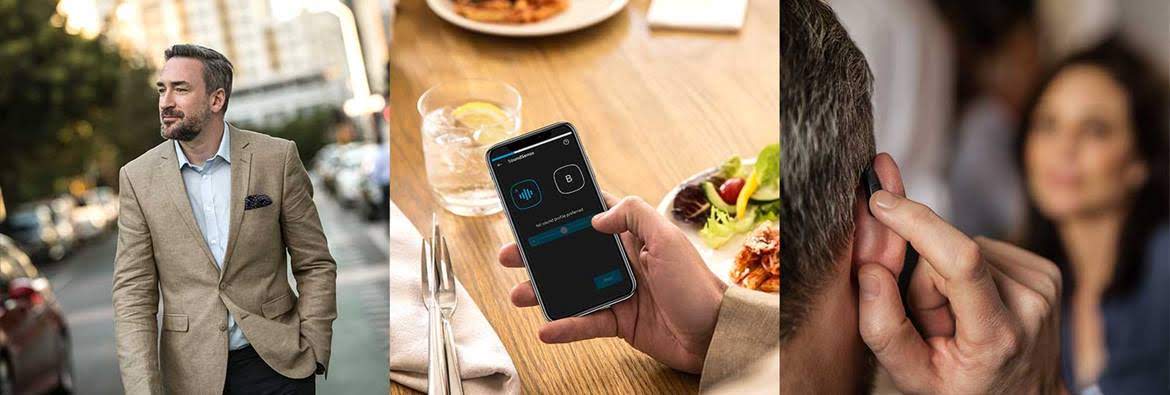
Widex seems to have taken pains to design the user part of the function to be simple. This is really important because if it is difficult to use, users just won’t use it. Widex offer a very simple A/B choice structure, does A profile sound better in this situation or B profile? The user picks and the data is stored and sent to the cloud via the Smartphone app. It is important for me to point out here that the data is anonymised, so you don’t have any privacy worries with this type of system.

A Limited System Loop

At present, the data will be used to understand how the hearing aids may better perform in different sound situations. That understanding will be used to change the underlying strategies in the hearing aids with firmware upgrades that will be pushed out by Widex through the Evoke app. In this way, the system is a limited loop, however, as machine learning evolves, I think you can expect to see changes happening in real time. 

Evolution of Machine Learning in Hearing Aids

I believe that as machine learning is adopted across hearing aid manufacturers, we will see an evolution in its function. We will see always on continuous data exchange between the hearing aids and the cloud server system. This will lead to higher functionality in hearing aids than ever before. Hearing aids of the future will continuously improve as more people use them in more situations. 

This will be dependent on users having access to wider fine-tuning protocols on their Smartphone apps and acceptance of greater complexity. Again, back to the data needed, more data points means better learning and decisions. I think the user of the middle future will happily accept that though, in fact, I think the customer of five years hence may well demand it.

Changing The Relationship With Professionals

What will it mean for your relationship with hearing professionals though? If hearing aids are going to continuously be fine-tuned in your ear, what will you need to see your hearing professional for? Initially, I don’t think this technology will have any effect on the current journey. However, as the technology evolves and uptake by users increases, I think the reasons that you see your professional will change. 

When the full evolution of machine learning is complete, I think the only reasons you will attend your professional will be purely service based. Basically to check the function of the hearing aid, to check your ability to hear and to validate or verify that the hearing aid is delivering the speech signal you need. I think that this is five or more years away, but the technology will change things. 

Changing The Business Model?

Will it change the business model of hearing aid delivery? I think it may, I think there will continue to be a hearing healthcare professional involved to test your hearing and give you recommendations on hearing solutions that are ideal for you and your lifestyle. Will they sell and fit those hearing aid solutions? Yes, no maybe, I think there will be different options and the answer to those questions will be based on the preference of the user.  

In essence, I think that as technology evolves the business model will change, I believe it to be inevitable. Based on my experience with hearing aid advocates across the world, I do believe that my profession will continue to be involved with hearing aids and the people who wear them. Even the most ardent supporter of self-fitting and access to fine-tuning has always wanted the continued involvement of a professional. 

What shape that involvement will take remains to be seen though, and I think it will be governed by the changing shape of the technology.

The Future of Hearing Aids, The Future Customer and Changing Hearing Healthcare

I have discussed future hearing aid technology before here on Know and it fascinates me greatly. Primarily because the opportunities and possibilities are endless. I was asked to speak at the inaugural conference of BIHIMA (British & Irish Hearing Instrument Manufacturers Association) recently on the subject of the future customer for hearing health. The conference was a fascinating one, focused completely on the future of hearing aids and hearing care.

The conference was really excellent with a variety of speakers focused on different topics that all focused on the future of hearing aids and hearing care. While my brief was the future client, (that’s you), I thought it was important that I also focused on how technology would shape your wants and needs and how hearing care professionals could meet those requirements. Take a look at the video and feedback and comments are welcome. We would like to hear the opinion of other hearing aid users on the topics that were discussed.

Call For Miracle Ear Hearing Aid Users For Small Research Study

We recently had some contact with a research company, they are undertaking a research project for a leading hearing aids company. In essence, they are looking for people who have purchased from Miracle-Ear within the last year and they are interested in how you have got on. 

They are an independent marketing research firm engaged in a project for a leading hearing aids company. For the study we specifically need to speak with people in the US, who have purchased a Miracle-Ear hearing aid in the past year or so. The interview will be about their hearing loss condition and treatment journey. Ideally, they would want to speak to people in their 70’s. 

40-minute online chat, receive a $100

Respondents would participate in a 40-minute online video chat interview in their own home and will be compensated $100 for their time and opinions. All respondents will need for the study is access to a strong internet connection along with a device with a camera and microphone such as a computer, a tablet, or smartphone.

The interview would take place on May 7 and 9 at a time that would be convenient for the respondents. If you are interested, contact Rachel Geltman at rgeltman@videochatnetwork.net