For many people, buying a new hearing aid is not as simple as “stick it in your ear and away you go”. As much as we’d like it to be so, buying a new hearing aid and getting the full benefit from it is often not as quick and easy as buying a TV and sitting down on the sofa to watch it.
Hearing aid technology has progressed rapidly in recent years, not only are the hearing aids themeselves amazing, but the programming software that professionals use to fine-tune them to our own personal requirements has also got quicker and easier to use – meaning that the aids can be accurately setup for your hearing loss in no time at all.
But how long does it take our brains to get used to new sounds and adjust so that we can understand them? This video from Sonova shows some research on it:
Twelve weeks!
Thats potentially three months between getting the hearing aid for the first time and your brain adjusting and allowing you to get full comprehension of the new sounds you are hearing, particularly speech.
I think this is where a lot of people get frustrated with their hearing aids, they want them to “just work”, and that’s a perfectly valid thing to expect, problem is that the hearing aids themselves are working great, its just us that need the time to fully appreciate them in all their wonder.
It will take different people different amounts of time to adjust, a seasoned hearing aid wearer like myself will adjust quickly but someone wearing them for the first time will take much longer, especially if that person has been waiting a long time to get hearing aids and their brain has had years of adjusting to receiving damaged sounds. To take into account this learning curve for new user, a audiologist will often set the volume to lower than required, so that your brain is not blasted with a onslaught of unexpected sounds.
The time it takes your brain to handle and comprehend the new sounds and the repeat visits to your hearing aid provider for volume increases and re-programming will determine how long it is before you get the full benefit from a new hearing aid.
Which leads to a question: you usually get a one-month trial period on a new hearing aid to determine if you want to keep them or not, what if it is taking you twelve weeks to adjust to the sound? My suggestions:
Don’t get frustrated if the hearing aid isn’t perfect in the first weeks of wearing it. Stick with it, wear it as much as possible and give your brain time to adjust to it.
If you have an App with your new aid, use it to try adjusting the sound and see what works for you. No-one knows your hearing like you do, if you experiment with the App you give your hearing aid provider priceless feedback on what setup works for you.
Visit your provider as often as possible to get tweaks to programming and volume.
Challenge yourself, listen to people you know, get them to whisper or talk facing away from you and see if you can hear them, train that brain.
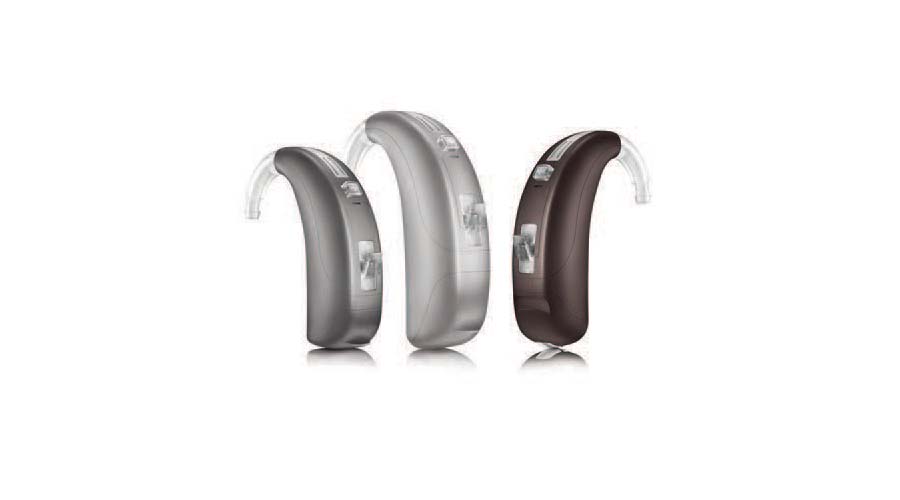
I had a great meeting with a lovely lady from Unitron lately named Leah Vusich to talk about the new Unitron Max super power hearing aids. I will be doing a podcast with the interview quite soon. Super Power hearing aids are designed for people with severe to profound hearing loss, and they are a very fussy bunch. So developing a product for them is not the usual everyday job. Even the strategies and features that are designed for people with severe to profound hearing loss are very different from the norm.
As I said, superpower hearing aid users are a pain in the ars, I mean have diverse needs, yes diverse that’s the word. The reasons are simple. Generally, they have been wearing hearing aids for almost their entire life. So they have a lot of experience with superpower hearing aids. In the past, superpower hearing aids had little finesse, and they were all about delivering power.
However, things progressed, and hearing aid brands have designed strategies and features to deliver better hearing. The problem is, that superpower hearing aid users don’t like them, they want what they are used to. This is the conundrum that hearing aid brands find themselves in. They want to offer their very latest features because they know they will help people with profound hearing loss to hear better.
The problem is that generally those features will be rejected by experienced users. A compromise needs to be found, and every hearing aid brand struggles with it. Unitron may have found an answer, let’s take a more in-depth look at what they are doing with their new Max.
Superpower With All The Features
The Max is a three hearing aid model, superpower range with five levels of technology. Unitron has based the feature set and chipset on Unitron’s celebrated Tempus platform. Unitron has packed these hearing aids with all of their amazing features which focus on the conversation. However, in a direct nod to superpower users everywhere, they have also ensured that they can be fitted with precisely what they want with ease. The devices have three settings designed to offer completely different strategies.
Superpower Pre-sets To Match Your Preference
Unitron has designed three easily chosen superpower pre-sets in the new Max that should suit the preferences of all superpower users from the first fitting. The pre-sets are as follows:
Classic: For people who prefer a time-honoured approach to sound processing, with little to no signal processing and no directionality. The most basic hearing aid you can get.
Conventional: For users who are looking for a more traditional approach to amplification, with moderate signal processing and some directionality. Hearing aids of about ten years ago.
Current: For people who want the latest and greatest approach to sound processing, with advanced signal processing and directionality. This is the most modern strategy and features available.
It is a simple task for a hearing care professional to switch between these modes. That means that the first fit of these hearing aids can and should match your preferences with ease. That’s a smart move by Unitron because it means that more superpower users should accept the devices.
Three Hearing Aid Types
The range has three hearing aid models, but one of them is not expected to land until sometime next year. The models are a traditional Superpower BTE or the Max SP, a traditional Ultra Power BTE or Max UP and a rechargeable Superpower BTE called the Max SP-R. The rechargeable device is not expected to land until some time in 2019.
Based on Tempus, Optimised For Superpower
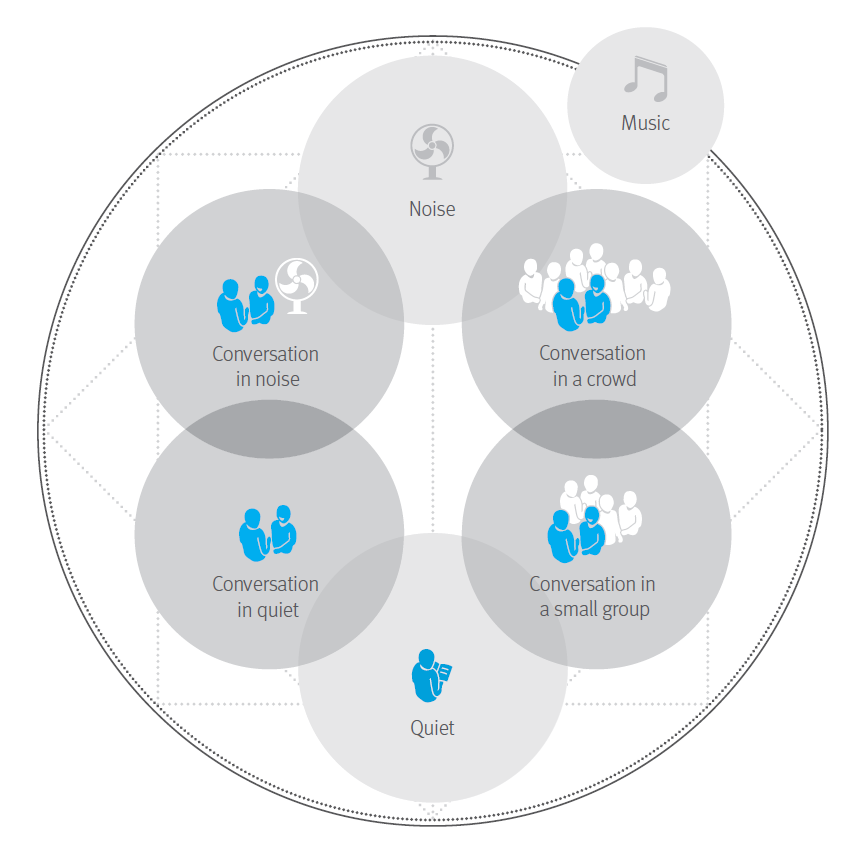
As I said, the new Max hearing aid range has the Tempus platform at its core. The Tempus platform has been much celebrated by professionals and users alike. Using an infinite mix of seven sound situations, the Tempus platform delivers what you need to hear better no matter the situation. Whether sharing, laughing, debating, commiserating, or merely being a great listener, their intelligent SoundCore technology makes conversations more enjoyable.
The four features work together seamlessly to understand your listening environment, making the instant, fluid adjustments that you need to participate in every conversation actively, no matter the situation. So you can just get on with enjoying the conversation without worrying about anything else. Let;’s take a look at the features that make Max unique.
Sound Conductor SP
Unitron says that the new Max automatically adjusts to provide optimal audibility for speech while maintaining comfort and overall awareness in all environments. It is optimised for the diverse needs of Super Power patients with severe-to-profound hearing loss, with a significantly stronger emphasis on speech, while maintaining a realistic balance of speech and noise
Frequency Compression 2
They say that the new Frequency compression 2 can deliver an optimal balance of sound quality and audibility at all times. No matter what the input signal is, it provides patients with improved awareness and speech intelligibility by compressing high-frequency sounds into lower, more audible ranges. All while adaptively preserving the natural sound quality of vowels.
Power Adaptation Manager
This is a responsible solution to reduce the risk of over-amplification. This feature helps improve first fit acceptance for you if you are accustomed to extra gain but would like to listen at a safe level. This is achieved by providing the starting point that you desire, then gradually and automatically reducing gain and output to a safer target level that maximises speech intelligibility.
Levels of Technology
The Tempus range is available in five different levels of technology, so there is a hearing aid for every budget. The technology levels are as follows
T Pro – These premium hearing aids work together to automatically help you hear your best in all types of conversations. When background noise is high, your hearing aids will focus on speech from any direction. You will also enjoy effortless, natural hearing and enhanced music performance.
T 800 – Both hearing aids communicate to automatically help you hear better in all types of conversations, especially when background noise is high. You will enjoy effortless, natural hearing and enhanced music performance.
T 700 – Both hearing aids communicate to automatically help you hear better, especially when background noise is high. You will enjoy effortless, natural hearing.
T 600 – These hearing aids automatically help you hear better in some types of conversations and when you are simply relaxing.
T 500 – These hearing aids help you hear better, especially in quieter environments.
The Max looks good; when combined with Unitron’s Flex system it should be an excellent choice for people with severe to profound hearing loss.
Just a quick note to anyone who has sent me an email recently and hasn’t had a reply.
My PC took a turn for the worse the other week and I had to re-install the operating system. I wasn’t able to salvage my email and so everything sent before Monday 10th November has been lost.
If I haven’t replied to you then please, please email me again and I’ll try to keep my PC working from now on!
And I’d like to say a massive thanks to everyone who has emailed and/or left comments on the site – it’s been great hearing from and talking to other bloggers and hearing aid wearers. Keep ’em coming.
I have noticed quite a bit going on the internet recently in relation to OTC hearing aids and their availability with increasing irritation. Generally, it’s a crock of shit (Irish technical term). Firstly, there is no such thing as an OTC hearing aid right now (Aug 2018), so they are neither legal or available. While the legislation to introduce OTC hearing aids has passed, the FDA has yet to specify what an OTC hearing aid actually is. So, therefore, the current crop of devices available that are being labelled OTC hearing aids, simply aren’t.
OTC Hearing Aids Don’t Exist
Over The Counter hearing aids don’t actually exist as a product line. The FDA first has to tell us what OTC hearing aids are. Until it does, which is expected to happen perhaps in 2019, they can’t exist. Yes, there are plenty of PSAPs and even a few hearing aids being sold online, but they can not be labelled OTC hearing aids legally.
OTC Hearing Aids are Not Legal or Available
As I have said before, OTC hearing aids are a brand new product concept, a product concept that there are no guidelines for. Once the FDA has finished its work though, I would expect to see many of them hit the market pretty quickly. Up until then, OTC hearing aids are neither legal or available.
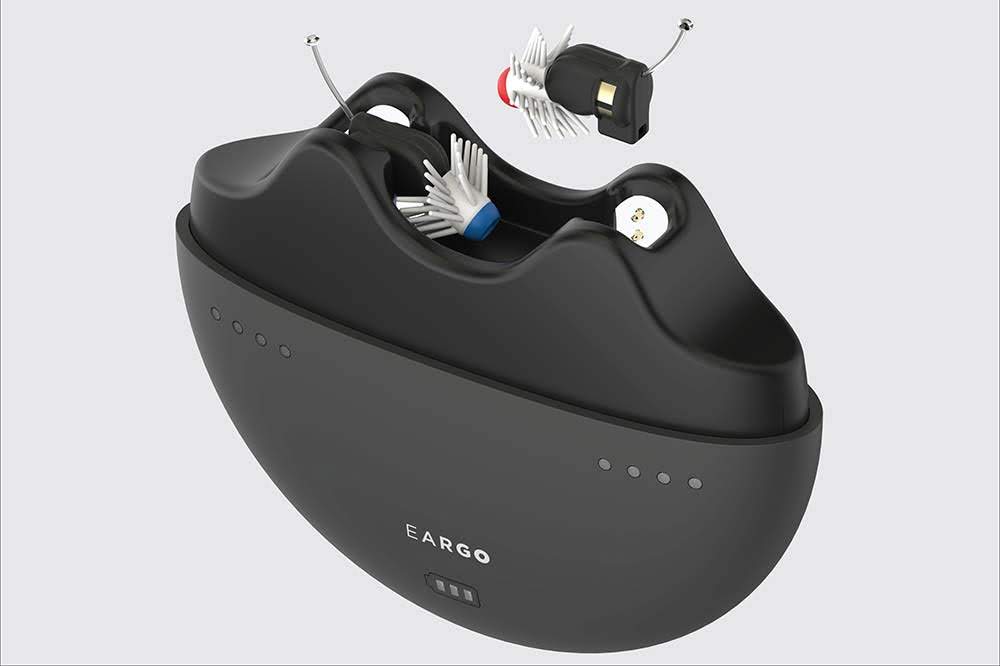
At present, you can buy devices like Eargo, which I discussed in Eargo, Do They Live Up To The Hype? and iHear. Just to be clear, neither of these companies have labelled themselves OTC. However, both offer online delivery of hearing aids. While both offer pretty good products, it remains to be seen whether either of them will fit into this new category.
No Guidance So Far
We have no guidance so far on what an OTC hearing aid should be, we understand that the devices should be able to help people with mild to moderate hearing loss. We also believe that the hearing aids will have to have some sort of self-fit and fine tune ability. That’s about it, we know no more because the FDA hasn’t reached its conclusions.
So if you see a product right now, labelling itself as an OTC hearing aid, that’s bullshit (another Irish technical term). Consider everything else that they say about the product as probable bullshit as well. We will be closely following the OTC hearing aid story here on Know, and when and as it develops, we plan to inform you in an in-depth manner.
I have spoken about online hearing aids sales and what you need to think about here before in Buying Hearing Aids Online? Here is What You Need To Know. The article is worth your time if you are considering the purchase of hearing aids online.
Hearing loss is one of the most common medical conditions, affecting nearly 50 million Americans. It can be difficult to follow conversations, hear important sounds, and even enjoy simple pleasures like birds singing. However, hearing loss doesn’t always occur on its own. For many people, it can be caused by or lead to more serious health conditions. Whether physical or mental, comorbidities of hearing loss can be serious or potentially life-threatening.
As such, if you believe you may have hearing loss, it is important to consult a hearing care professional to evaluate the extent of your loss and advise you on any potential comorbidities you may have. Either way, you should be aware of the associated medical conditions that can lead to hearing loss, occur at the same time, or result from it.
Health conditions that cause hearing loss
There are several conditions that can lead to hearing loss, either directly or because of the medications used to treat them. These can include: Traumatic brain injury: Head trauma resulting from a car accident or fall can lead to hearing loss in several ways. For one, the trauma could damage the tiny bones in the middle ear or the cochlea itself, impairing hearing directly. Alternately, a traumatic brain injury can lead to hearing loss by affecting how sound is processed by the brain. Meniere’s disease: Meniere’s disease is a condition that currently has no known cause, but is believed to involve excess fluid in the inner ear. Symptoms include episodes of vertigo, ringing in the ear, or tinnitus, and hearing loss. Though it often affects only one ear, over time it may spread to both. Diseases treated with ototoxic medications: Whether prescribed or over-the-counter, some drugs used to treat certain medical conditions are ototoxic, having a harmful effect on your hearing. These include chemotherapy and other drugs for cancer treatment, antibiotics like gentamicin, streptomycin, and neomycin, and non-steroidal anti-inflammatory drugs.
Ailments that occur alongside hearing loss
Rather than causing hearing loss, some medical conditions occur at the same time, or have hearing loss as one of their symptoms. Diabetes: Diabetes is one of the most common comorbidities of hearing loss, with patients twice as likely to have diminished hearing compared to those without diabetes. The effects of high blood sugar levels can damage the blood vessels and nerves of the inner ear, diminishing your ability to hear. Cardiovascular disease: Damage to the sensitive blood vessels of the inner ear is also a symptom of cardiovascular disease and other circulatory conditions. Poor blood flow to the auditory system due to plaque buildup in the blood vessels can lead to hearing loss, which is often the first sign of heart disease. Thyroid disease: Illnesses affecting the thyroid, such as Pendred syndrome, Grave’s disease, and Hashimoto’s disease, have all been linked to hearing loss. While the connection is still being researched, thyroid disease is known to affect several bodily processes, including heart rate, energy level, and hearing.
Conditions that result from hearing loss
Rather than being a direct cause of hearing loss, some medical conditions occur because of hearing loss—often due to lack of treatment. Cognitive decline and dementia: Difficulty hearing can lead to mental health conditions like dementia and other types of cognitive decline. Straining to hear conversations and other sounds can overwhelm the brain and lead to diminished cognitive ability. Hearing loss can also make you feel embarrassed to be around others, and the resulting social isolation can exacerbate dementia. Depression: Hearing loss can lead to depression in several ways. For one, just like with dementia, not being able to hear others can make it difficult to be around people and cause you to withdraw from social situations. It can also damage relationships with those close to you. Constantly asking your family and friends to repeat themselves or having the TV too loud can lead to frustration. Also, the very fact that you can’t hear the sounds you used to can be stressful and saddening. If hearing loss remains untreated, these feelings could worsen and lead to depression.
Healthy hearing, healthy living
The impact of hearing loss on your health goes beyond just your ears, affecting your physical and mental wellbeing. Given the connection between hearing loss and many other illnesses, the benefits of improved hearing to your overall health are clear. Since hearing loss is so closely tied to other issues, it is important to consult with your hearing care professional and primary care physician if you’re having hearing difficulties and find out if any of the above comorbidities are also present. By taking care of your hearing health, you can help keep the rest of your body healthier as well.
If you like what you see, share it so others can benefit
GN Hearing and Google Announce Partnership to Bring Direct Mobile Streaming from Android Devices to Hearing Aids
GN Hearing and Google have today announced a new technology partnership that will make GN Hearing the first hearing device manufacturer to enable a full spectrum of direct audio streaming from Android devices to hearing aids. The expectations are that direct streaming will become available to hearing aid users of the recently launched hearing aids ReSound LiNX Quattro™ and Beltone Amaze™ in a future Android release.
No More Streamers
Up to now, Android phone users have been stuck using streamers to play audio from their phones and to answer phone calls. Unlike Apple products, Android products were not enabled for direct connection. Earlier this year, there were reports that hearing aid support would come with the release of Android P and code commits were seen in the open source code that was available to developers.
This partnership confirms that the capability will be released and hopefully we will see it very soon. Initially, the new update will probably only be available on Google products, as they are the very first to get updates to the Android system. Other phone makers usually follow on within a couple of months. I would imagine that Samsung will respond pretty quickly and push the upgrade out to their products as soon as physically possible.
First For Made For iPhone, Now First For Made For Android
Resound were the first hearing aid brand to introduce Made For iPhone in 2014. Now fittingly, they will be the first hearing aid brand to introduce Made For Android. I for one, can’t wait.
Ruth Kirkham has told her story of sudden hearing loss before here on Know, today she would like to speak about her personal perspective of the resulting tinnitus. Unfortunately, tinnitus can accompany sudden hearing loss more often than not. Without further blah, I will hand you over to Ruth.
An Aniversary, But Not a Happy One
Yesterday was the two year anniversary of my hearing loss. I suffered a sudden sensorineural loss after a night out with friends which would seem to have been the result of a virus that attacked my inner ear and left me with a moderate to severe loss in my left ear. The virus caused me no other symptoms and my hearing disappeared in the time that it took for me to sit down on the sofa. Much of that I have come to terms with. It’s frustrating not to hear as I once did and there are days when it is more debilitating than others, but it is what it is and I move forward.
Yesterday was also (not coincidentally) the two year anniversary of my journey with tinnitus which is the cheeky, incessant, annoying little sibling of hearing loss. The moment I lost my hearing a loud whooshing and high pitched squealing started which has never really stopped. It changes sometimes, increases often, decreases rarely and is generally made a little better when I wear my hearing aid. In one way I think I’m lucky because I now realise that I’ve always had tinnitus. Not at the same level and nowhere near as loud, but that distant humming I’d hear at night, the sound that was maybe outside or maybe it was the low rumble of the heating or perhaps a factory somewhere off in the distance – all that I now realise was tinnitus and I’d been dealing with it perfectly well, albeit at a quieter level, for years.
It’s taken some time to come terms with obviously, but to be honest I rarely get driven completely crazy by tinnitus. I don’t like the spikes when the usual squeal increases for reasons that I can’t understand and I hate the momentary deafening increases that sometimes afflict both ears, but thankfully those do seem to be momentary and in general the one-sided squeal of my tinnitus (accompanied by the low rumble in my good ear) is something that I try not to give the time of day to.
Tinnitus can be an absolute pain, it’s there, but it’s not going anywhere so like the loss of hearing it’s just something one has to come to terms with. I’ve found that a hearing aid helps – I suspect that when the brain detects more sound it spends less time sending random squealy signals and more time actively deciphering that sound, an assumption that seems to be backed up by Karen Simpson in her post on the connection between tinnitus and hearing loss, though in my case I have no tinnitus support programmed, but find the general boost to my hearing beneficial in that respect.
Night time can be tricky, but strangely I’ve found that on the days that my tinnitus seems louder completely trying to ignore it is counterproductive. Instead, sometimes I just lie and listen to it. All the different pitches and sounds, all of what I can hear above those sounds and I try to just accept that it’s there. Perhaps it all sounds a bit new-age, but I find that mindfully accepting tinnitus and hearing loss without trying to judge either (certainly easier said than done and I’m not always successful), is the path toward living well alongside them.
Lindsay Engle of Medicare Faq speaks today about hearing aid coverage for Seniors with Medicare. Original Medicare does not normally cover the cost of hearing aids. However, Medicare coverage may help to cover the cost of hearing aids and related hearing services. I will hand you over to Lindsay
As the baby boomer generation reaches and exceeds the age of 65, the need for good, affordable hearing aids will continue to expand. Problems arise when you experience hearing loss and look for a good, affordable remedy. You may be unprepared for what you find when seeking out high-quality, affordable hearing aids.
Medicare and Hearing Aid Costs
Probably the first question will be, “Does Medicare offer any coverage for hearing aids?”. The real battle will then begin. Like many seniors, you may be financially challenged, having little more than Social Security to cover your expenses. Must you avoid social interaction or just deal with the frustration of not being able to hear normal conversations?
Medicare Part B
If you are a senior citizen on Medicare and have a hearing loss issue, you will be able to get coverage through Part B Medicare if your physician recommends these services because of a medical condition such as vertigo. In the absence of a medical indicator and an order from a health care provider, the hearing exam and hearing aids would not be covered.
Even if Medicare Part B does cover the services due to a medical condition, the 20 per cent copay will be your responsibility to pay, unless you have coverage through a Medicare supplement plan. If the hearing test was done in a hospital, and the hearing aids provided there, then you would have to pay the hospital copay.
What is Meant by Medically Necessary
Remember that patients who have coverage with Original Medicare generally must pay 100 per cent of hearing tests and hearing aids because they are routine care.
If the healthcare provider suspects you may have a disorder that will require medical treatment, and a balance test or hearing exam is required for proper diagnosis, then Medicare Part B may cover up to 80 per cent of Medicare’s allowable rates after you pay any necessary deductible).
To help you understand medical necessity, consider the case of a patient who presents to the doctor reporting at least two episodes of vertigo, each of which had a duration of between 20 minutes and 24 hours (not exceeding 24 hours). The patient may have experienced vertigo (ringing in the ears) or a full sensation in the ears and reported hearing loss. The hearing test would then be needed to confirm the hearing loss.
Medicare Supplement Plans
Without insurance to cover or supplement the costs of hearing aids, your cost per hearing aid could be in the range of $2,400 each. The next question might be whether or not a Medicare supplement policy (Medigap) would cover any of your hearing aid expenses.
At this time, none of the 10 Medicare supplement plans available cover hearing aids. If a patient has a hearing problem due to a medical condition and has been referred by a doctor, a Medigap policy could help cover the 20 per cent out-of-pocket cost of the hearing examination.
Patients who have Plans C or F will have the deductible covered. That is the amount the patient is obliged to pay before Medicare makes any payments on any services.
Do Medicare Advantage Plans Cover Hearing Aids
Part C Medicare (Medicare Advantage Plan) is a private policy offered through Medicare that offers the same benefits as Part A and B, as well as potentially some additional coverage. These extra benefits may include dental and/or vision insurance, prescription drug coverage, and in some case hearing aids. To date, most Medicare Advantage Plans still do not offer hearing aid coverage.
Legislation to Help with Hearing Aid Costs
Congress passed the Over-the-Counter (OTC) Hearing Aid Act in August 2017, making hearing aids more accessible to patients with mild-to-moderate hearing loss. After the Food and Drug Administration composes updated regulations that assure the safety of these products, the OTC hearing aids will become more widely available for purchase without a doctor’s prescription.
This legislation is a step in the right direction to help people who cannot afford to pay the high price of hearing aids, but for many people, the price will still be restrictive. The goal of the new law is to continue to reduce hearing aid prices in the future to make them accessible to more people.
Proactive Steps to Get Help with Hearing Aid Costs
Patients do not have to be passive about their hearing needs. Information is available online and through healthcare providers, as well as hearing aid companies, that can guide you in finding help.
Private insurance companies offer a spectrum of plans that cover varying benefits, many at affordable prices. For veterans, a good place to start would be the local VA Office.
Regardless of which Medicare Plan you choose, the insurance policy will list the number of a representative to call 24 hours a day. This person will be able to check the specific plan and outline in detail what it will cover. There will also be advice as to what specialized policies can be added to help cover specific needs.
Conclusion
If you are one of the millions of Americans who experience hearing loss, know that there are steps you can take to find assistance with the phenomenal costs of hearing aids.
Turn to your health care provider or your health insurance representative for information and guidance. You can also seek help 24 hours a day at http://www.Medicare.gov.
As we reported earlier, Resound has announced the launch of a new premium plus hearing aid called the LiNX Quattro. I have been delving through the press release and the details on their website. While there are some pretty clear headlines that are discussed, many of the details have been left purposely vague. I imagine most of those details will be fleshed out over the next few weeks as they are launched to professionals and then to consumers. I wanted to outline clearly what we know, and take a guess at what we don’t, educated guesses in fairness. Hey, if I am wrong, you get to laugh at me, how bad is that? However, from what I am seeing, this hearing aid has pretty much the best of all worlds.
The devices will only be available in one new technology level
The devices are Receiver In Canal devices
The devices are Bluetooth hearing aids
The devices use a brand new chip platform
The chip has 100% faster processing than 3D
The chip has 100% additional memory over the 3D
Resound are using a new way of handling directionality inputs
They have introduced a redesigned wireless radio with extra signal strength
They have extended the bandwidth of the devices giving extra high-frequencies
They have increased their dynamic input range, calling it industry leading
The devices are available with a Lithium-ion rechargeable battery pack and without
The rechargeable hearing device will deliver 24 hours of use with 50% streaming on a three-hour charge
The Lithium-ion devices will deliver 30 hours of use without streaming on a three-hour charge
Pretty Discreet
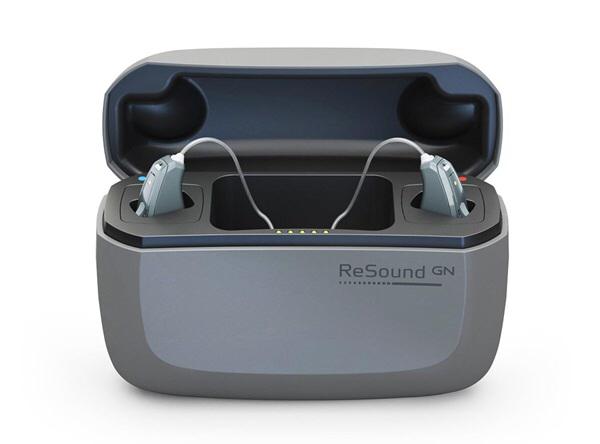
Let’s take a closer look and give some observations on what we have seen so far. Firstly, the rechargeable hearing aids look pretty discreet. The Lithium-ion version is based on the LT-61 device which is Resound’s smallest RIC hearing device. The devices look very like the normal LT-61 but the bottom seems to flair a little, I would assume to hold the Lithium-ion powerpack. What is interesting is that there are no visible charging connections, so the devices are either using some sort of wireless charging or induction charging system. They are also available in an LT-62 version which is the slightly larger RIC hearing aid from Resound. This version uses normal hearing aid batteries, I have a feeling they probably won’t sell a lot of them.
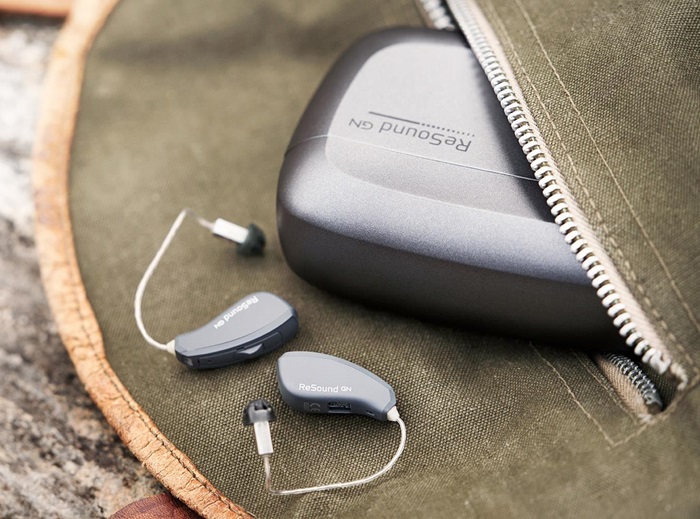
The charger for the rechargeable device is both a desktop charger and a carry case for the devices. The charger holds its own charge and can be used for recharging the hearing aids on the go. The charger seems to be an intelligent charger with an auto off and on function for the hearing aids. It also offers clearly visible LEDs that allow you q quick understanding of the charge state of the hearing aids. The charger seems very well designed and in the promo shots, it looks pretty sturdy.
A New Technology Level
The LiNX Quattro will be available in a new technology level that Resound are introducing called Premium Plus. They will initially be released in the two RIC form factors and they will sit above the LiNX 3D which they will continue to offer. There is no word at this stage if Resound will introduce more form factors or how they envision the expansion of the Quattro range.
A New Chipset
Resound say they are using a new chipset and give some pretty good stats on the improvements over and above the LiNX 3D. Both myself and Steve wear the LiNX 3D 9 regularly and the devices are excellent. SO I am interested to see what the new chipset offers over and above the existing device. One of the things they seem to have used it for is a new type of directionality, on top of that they have saved power consumption by 20% on the LiNX 3D.
They have also used it to increase the dynamic range of the devices, this allows a more normal use of sound inputs. It means that louder sounds won’t become distorted because they won’t be compressed on input. Without getting too technical, it will mean louder sounds are more normal and be more pleasant.
A New Directionality System
They haven’t included many details on this, just a teaser, from what they are saying though, it seems that how they handle speech in their directionality rules may well have changed. How much so, remains to be seen, but I have a feeling it is a radical change. I think they have given greater emphasis to speech from every direction and allowed their noise reduction to work between. It should deliver a more normal sense of sound in noisier environments.
Better Bluetooth Connection
The newly redesigned wireless radio should make the direct connectivity to iPhones and hopefully Android phones in the near future more stable. Resound already delivers a pretty stable connection, but any improvement here will be welcomed by me and all of the other people who end up on our knees in the back garden offering our firstborn to the Gods of Bluetooth when our phones stubbornly refuse to connect. With the bigger dynamic range and the wider frequency bandwidth, music should sound really good.
To be honest, this hearing aid seems to have pretty much the best of all worlds. While the features concepts are not necessarily groundbreaking, this is the only hearing aid that seems to do them all well in one device. Those are my observations so far, if I hear any more, I will, of course, update the post. When the hearing aids are formally launched, we will give you all a full rundown of what we find out.
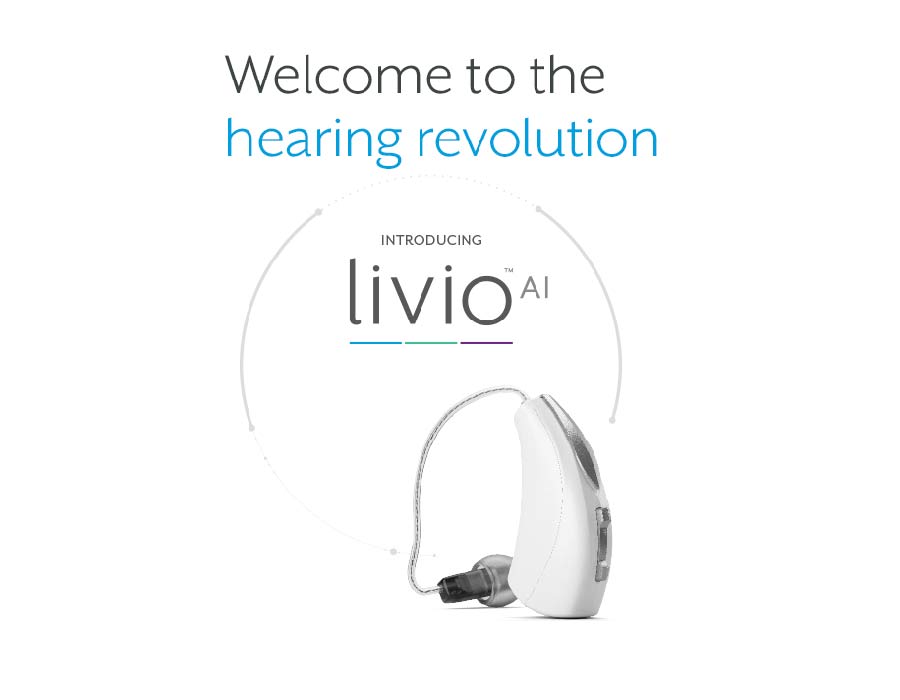
The much-awaited Livio AI from Starkey has now been launched and they have been a bit of a smash hit in the tech world. But is it more sizzle than substance? Not really, I think that the premise of the Livio AI opens up an entirely new use case for hearing aids and may well make the devices far more attractive to new consumers. The premise of the devices represents a great leap forward for hearing aid technology. Starkey says, welcome to the revolution, and for once, that actually isn’t quite marketing fluff. Let’s take a look at why I think this latest offering points the way for hearing aids in general.
A New Use Case
The Livio AI presents users with a completely new use case for hearing aids. A merging of different technology means that the device offers far more than just better hearing, it also offers a more holistic view of health and to a certain extent cognitive fitness. In the near future, it will also offer a feature that will allow caregivers or loved ones to monitor if an older user takes a fall. Let’s take a look at what has been said and cut through the marketing fluff.
The Big News A Hearing Aid That’s a Health Tracker and More
The Livio AI is truly a multifunctional device that combines features from wireless headsets, fitness trackers and health apps, and finally, language translation programs. That’s right, language translation. Oh, and it appears to be a very interesting hearing aid as well. The keys to all of this are a brand new chipset, an embedded sensor on the chipset and 2.4Ghz communication between the hearing aid and a smartphone. This allows the monitoring of movement and a deeper instantaneous communication between the hearing aids and a smartphone which has been leveraged to deliver real user benefits.
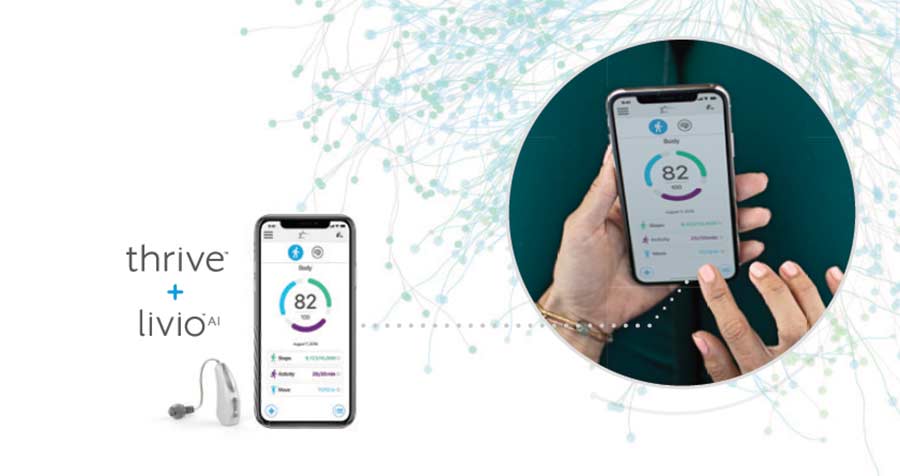
Health Monitoring With The Thrive App
The health monitoring element of the Livio AI is offered via the Thrive App. It offers two measurements that both deliver the possibility of a score of 100 points. It focuses on a Body score and a Brain score. The body score is calculated through a combination of activity, steps and overall movement. This information is tracked daily and accessed easily in the Thrive app. As I said, a daily score of 100 points is possible.
Cognitive Health
Starkey says that because of the important connection between cognitive health and hearing health, Livio AI measures the brain benefits of wearing hearing aids. That’s marketing fluff, however, there is some validity to what they are doing. The metrics used to measure the Brain score include hours of daily use, social engagement and the tracking of active listening. Again the daily score of 100 points is possible.
Does it really give you a score based on cognitive health? No, it doesn’t, however, it gives you a clear idea about some of the things that we know promote good cognitive health.
Language Translation
Like the embedded sensor, this really is a world’s first, it is an integrated feature to help users easily communicate with people who speak other languages via an easy-to-use translation tool in the Thrive app. The feature is Smartphone based so you will need a Smartphone to make it work, I think it will only work directly with an iPhone. If you have an android phone, you will probably have to use a streamer for it to work.
This really is a cool feature that offers more than just coolness. Many seniors travel in retirement, this type of feature will make that travel easier. It will also appeal to younger users, again, they like to travel, who doesn’t like the idea of easier communication?
Fall Notification
This will come in a future update, in essence, the sensor can sense a fall. It will then set off a notification to be sent to someone that the person wearing the devices has fallen. I think this is an amazing feature and I believe it is a feature that will make families of older hearing aid users very happy. It will be interesting to see how this feature is deployed. I will keep you updated on the evolution of this feature.
Binaural Compression
On top of those headline features, there is a lot more to talk about. There are a host of features you need to know about, some are new to Starkey, some aren’t. These look like really solid hearing aids, they are automatic hearing aids that offer binaural processing of sound. That means that the aids work as a unit to make decisions about what they do. The binaural compression strategy also retains auditory and spatial cues that naturally occur so the experience should be more natural.
Remote Programming
Starkey has also introduced remote programming facilities in the Livio AI, Patients can request adjustments from their professional remotely to help fine tune their hearing experience.
Find My Hearing Aids
This feature has been around for a long time, you can easily locate lost hearing aids using the Find My Hearing Aids feature, with both a location and timestamp. A signal detector sends a stronger or weaker signal based on how close you are to locating their Livio AI hearing aids. While this will definitely work with iPhones, I am not sure about Android phones.
Phone Calls Direct to Hearing Aids
So Starkey says that you can answer calls with the touch of a button and hear an entire conversation streaming directly to their Livio AI hearing aids. I take it this means that you can use an iPhone as you would with other Made For iPhone hearing aids. If that is what they are talking about, then I would imagine you will need a streamer for Android.
Remote Control
There is a remote control feature in the Thrive app, which will allow you to change volume and switch memories.
Personalized Memories
This has been around for a while and Starkey does it exceptionally well. Basically, you can create multiple custom memories in the Thrive app by using any of the Customise options. It gives you a lot of freedom in the personalisation of your experience.
You can also geotag memories, a geotagged memory will use your Smartphones GPS and cellular towers to recognize where you are and automatically adjust your Livio AI hearing aids when you enter the space. For instance, if you set up a geotagged “coffee shop” memory, it will automatically activate when you walk into that coffee shop.
Audio Notifications From Your Smartphone
Notifications for phone calls, texts, emails or other apps can be streamed directly to your Livio AI hearing aids but only if you are using an iPhone, if you have an Android, you will need a Streamer.
Adaptive Car Mode
This is a new automatic hearing aid setting, in Adaptive Car Mode, Livio AI hearing aids will automatically change to a setting designed to reduce the annoying sounds of driving and enhance your overall driving experience.
Universal Bluetooth connectivity
Starkey says that the Livio AI hearing aids connect simply and easily to any modern smartphone, TV or media device, like Amazon® Echo, to stream phone calls, music, voice assistants and more. Again, we will need more info on how that works but as I get it, I will update the article.
AI Artificial Intelligence
Starkey has labelled the new Livio with the buzzword Artificial Intelligence. To be honest, there really isn’t a true artificial intelligence feature within the hearing aids. Or at least not one that fits the normal conceptual parameters. Having said that, and without doubt, these are a big leap forwards for hearing aids, I think their marketing department got a little over exuberant with the name.
Two Hearing Aid Types
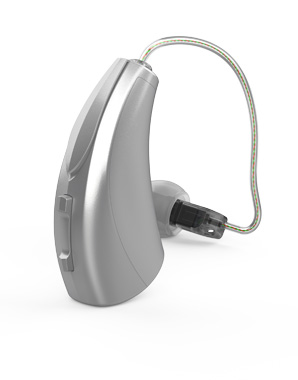
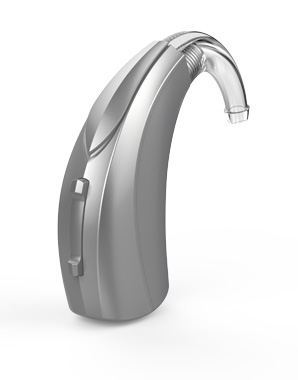
The Livio AI will be available in two different hearing aid types, a Receiver In Canal device and a Behind The Ear device. The RIC has two options, one for moderate to severe hearing losses and one for severe hearing losses. The BTE will cover down to severe hearing losses. The RIC is powered by a 312 battery and there is no word on a rechargeable option. The BTE is powered on a size 13 battery.
As I said, these hearing aids represent a big leap forward in hearing aid technology. I think they point the way towards the future of hearing aids as an integrated health device. It will be very interesting to see how consumers receive them. I think they will be well received by both older users and younger users, while many think older users aren’t as techy, there are still features here that will excite them.



 Thisishearingaidknow